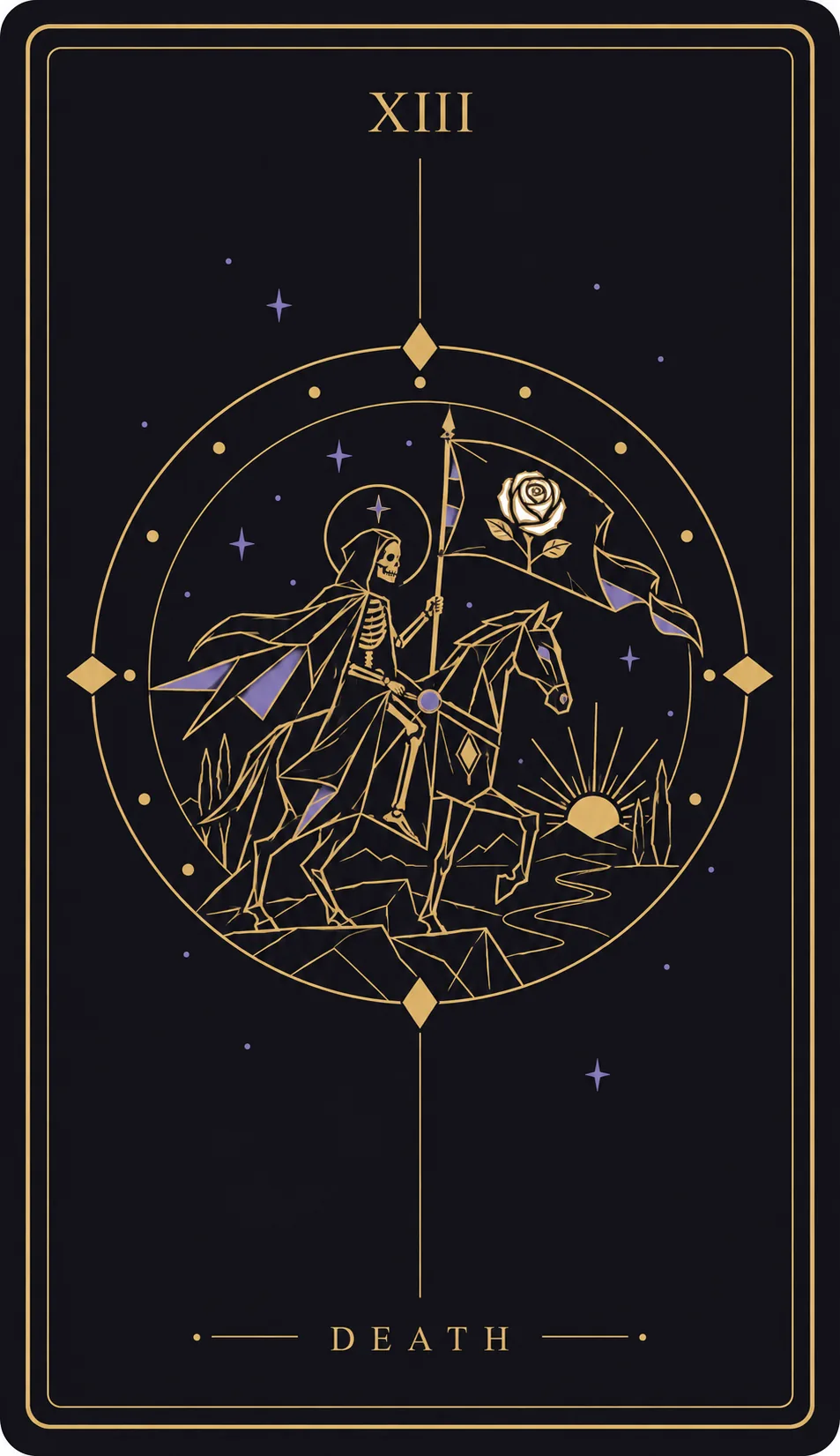
Death
- Number
- XIII
- Arcana
- Major Arcana
- Element
- Water
Upright keywords
- endings
- transformation
- transition
- release
Reversed keywords
- resistance to change
- stagnation
- fear of endings
Death upright
In the classic 1909 Pamela Colman Smith deck, Death rides a white horse through a field where a king has fallen, a child offers flowers, and a bishop stands to plead. Behind them all, the sun rises between two pillars. Nothing here is about physical death; it is about the moment a chapter closes and refuses to reopen. As a water card, it moves like a tide you cannot argue with.
Drawn upright, this can point to something in your life that has already ended, even if you are still keeping the lights on. A role, a friendship's old shape, a version of yourself that fit three years ago. You may notice relief hiding underneath the grief. It might be worth asking what you are still carrying out of habit rather than need.
Death reversed
Reversed, Death can suggest you are standing with your heels dug in while the tide comes in anyway. The rider in the classic image does not hurry and does not stop; when the card turns over, that steadiness can feel like pressure you are bracing against. You may recognise it as rereading old messages, keeping a project alive long past its energy, or telling yourself you will deal with it after one more month.
This is rarely stubbornness for its own sake. More often it is fear of the empty space after the ending, which is a reasonable thing to fear. As a water card reversed, grief may be sitting unmoved rather than flowing. A small acknowledgement, said out loud or written down, can loosen more than a grand decision.
Death in love
Death in love rarely means a relationship is over. More often it points to the end of a particular way of relating. The pattern where one of you always smooths things over, the roles you fell into early and never revisited, the version of closeness that worked before someone changed jobs or cities or minds. The rising sun in the classic image sits behind the ending, not instead of it.
You may notice a quiet readiness to speak more honestly, or a reluctance to keep performing an old self for someone who would probably welcome the newer one. With friends, this can mean letting a connection rest without declaring it dead. With yourself, it might mean releasing a story about who you have to be to deserve affection.
Death at work
Death can arrive when a piece of work has finished before you have admitted it. The project that still has tasks but no pulse, the course you chose for reasons that no longer apply, the job you describe to others in the past tense without noticing. In the classic image everyone meets the rider differently; some plead, some simply look up. Your own response is worth watching.
This card may invite you to let something close properly rather than letting it fade. That could be a final tidy-up, a handover, a conversation that names the change. Endings in work often free up attention you did not know was occupied. It might be worth asking what you would have room for if one dwindling commitment were genuinely finished.
Death and your inner life
As a water card, Death works on you the way the sea works on a coastline: slowly, then all at once. It can point to a season where an old self-image stops fitting. The identity built around being the reliable one, the ambitious one, the one who never needs help. Letting it go can feel like loss even when the new shape suits you better.
The child in the classic image greets the rider with flowers, which is worth sitting with. Try this: name one thing you have outgrown but still perform, and give it a small, deliberate goodbye. Clear the drawer, delete the file, stop telling that story about yourself at parties. What would you make space for if you stopped tending something that has already ended?
Death as a yes or no
Death leans toward *not yet, and not in the shape you are asking about*. The rider moves steadily forward and the old banner has already fallen, which suggests the question may be pointing backwards, toward keeping something alive rather than seeing what follows it. A straight yes rarely fits a card whose whole gesture is release.
If your question is about ending, closing, or letting go, the lean tilts toward yes. If it is about reviving, holding on, or restoring things to how they were, the card seems to shake its head gently. Either way, treat this as a prompt rather than a verdict. It might be worth asking yourself which answer you quietly hoped for, and what that preference tells you about where you actually stand.
Tarot is for reflection and entertainment. It isn't medical, legal or financial advice.
Draw a card for your question
Hold your question in mind and draw one card. It's free, truly random and takes a minute.
Draw your card