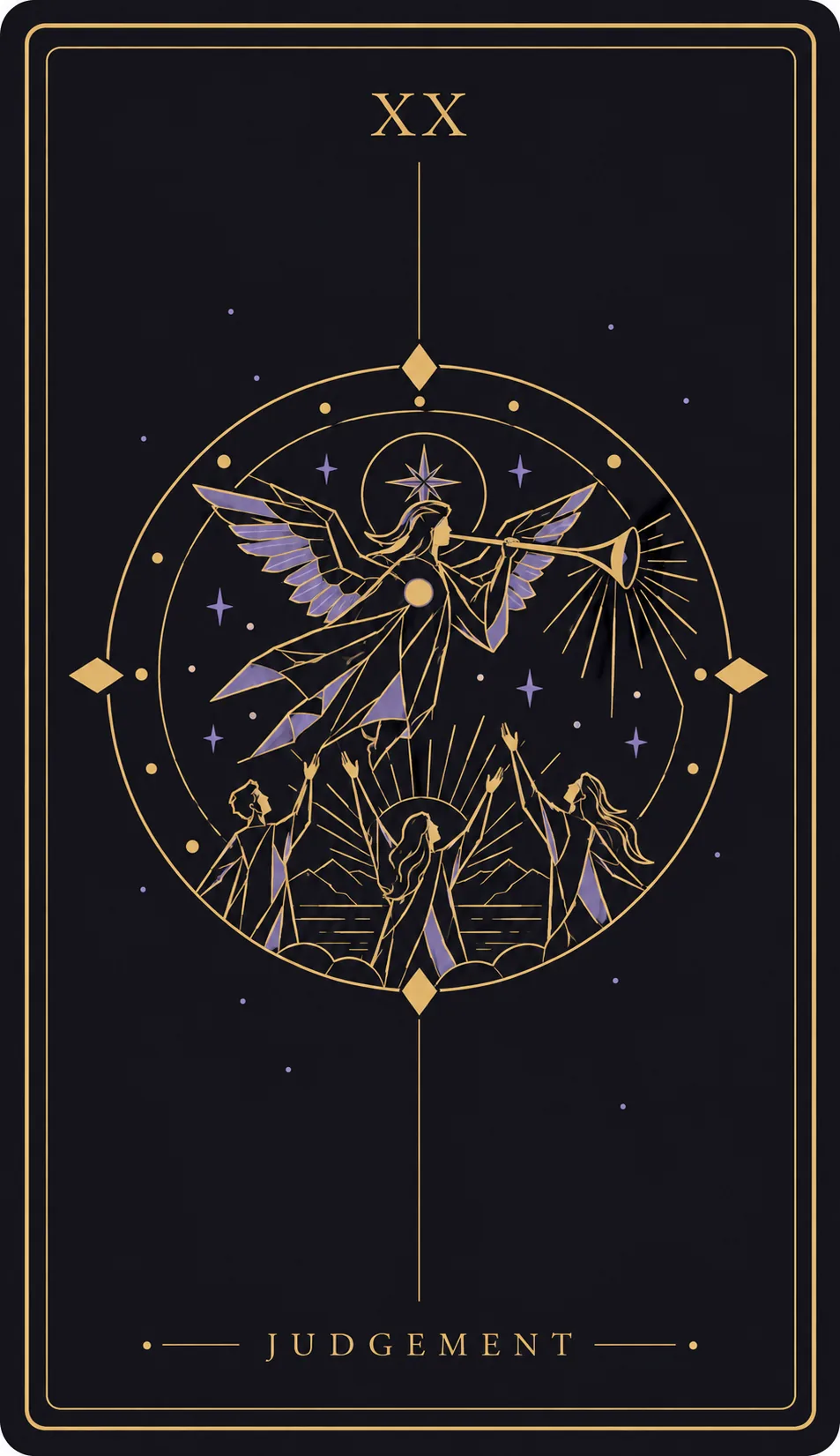
Judgement
- Number
- XX
- Arcana
- Major Arcana
- Element
- Fire
Upright keywords
- awakening
- reckoning
- renewal
- calling
Reversed keywords
- self-doubt
- harsh self-judgement
- ignoring the call
Judgement upright
In the classic 1909 Pamela Colman Smith deck, an angel sounds a trumpet and pale figures rise from open coffins with their arms lifted, faces turned up, nothing hidden anymore. Judgement is a fire card, and fire here is the clarity that comes when something you half-knew finally becomes undeniable.
Drawn upright, it can point to a moment of honest reckoning: looking back at a chapter, seeing it plainly, and deciding what you carry forward. You may notice an old interest resurfacing, or a conversation you keep rehearsing finally asking to be had. There's often a sense of being called, though the call is rarely dramatic. It might be worth asking what you already know about your situation that you haven't said out loud yet.
Judgement reversed
Reversed, the trumpet still sounds, but the figures stay in their coffins. The call may be reaching you and meeting hesitation, or it may have arrived and been filed away as *not now*. Fire turned inward can smoulder into harsh self-judgement: replaying old choices, grading yourself on a curve no one else is using, mistaking that soreness for honesty.
This position can also suggest a verdict delivered too early, on yourself or on someone else, before the evidence was really in. You might notice how much energy goes into defending the verdict. A gentler move is to separate the review from the sentencing — look clearly at what happened, and leave the condemning out of it for a day and see what remains.
Judgement in love
Judgement in matters of closeness often speaks to the conversation that clears the air. The risen figures in the classic image stand exposed, nothing tucked away, and that is the quality this card brings to relationships: honesty that doesn't flinch, offered without cruelty.
You may find an old pattern becoming visible — the way you withdraw, the thing you always apologise for, the friendship you let thin out without deciding to. Judgement can mark the point where you see it and choose differently. With someone close, it might look like naming what you actually want rather than hinting. With yourself, it may be forgiveness for a version of you who was doing their best with less than you have now. What would you say if you weren't managing the reaction?
Judgement at work
This card can arrive when a chapter of work or study is asking to be assessed honestly. The trumpet in the classic image is a summons, not a punishment: it calls you to stand up and be seen as you actually are. You may feel drawn to review a project, reread something you made a year ago, or admit that a role you grew into no longer fits the person you've become.
Fire gives this a sense of vocation — the pull toward work that feels like yours rather than merely available. That pull is worth examining slowly rather than obeying instantly. You might list what in your current days genuinely absorbs you and what you endure, then notice which list has been growing.
Judgement and your inner life
Judgement invites a particular kind of inner honesty: the review without the verdict. In the classic image, the figures rise with open arms and upturned faces — not defending themselves, not apologising, simply willing to be seen. Fire here burns off the story you've been telling about yourself so that something truer can stand up.
This can be a good season for looking back at a year, a decision or a relationship and asking what it actually taught you, as distinct from what it cost. Old selves can be thanked rather than disowned.
A practice to sit with: write down one thing you've privately held against yourself, then write what you'd say to a friend who told you the same thing. What changes when you address yourself in that voice?
Judgement as a yes or no
Judgement leans toward yes, with a condition attached. The trumpet in the classic image sounds and the figures rise of their own accord — the call is clear, but it still needs an answer from the person hearing it. So this card tends to favour the course of action you already suspect is right, especially if it involves honesty, a return to something unfinished, or stepping into visibility.
Where it hesitates is when the question is really about whether you can avoid deciding. Judgement doesn't support staying in the coffin. As a leaning to reflect on rather than an answer: yes, if you're prepared to be seen making the choice and to live with the reckoning that follows it.
Tarot is for reflection and entertainment. It isn't medical, legal or financial advice.
Draw a card for your question
Hold your question in mind and draw one card. It's free, truly random and takes a minute.
Draw your card