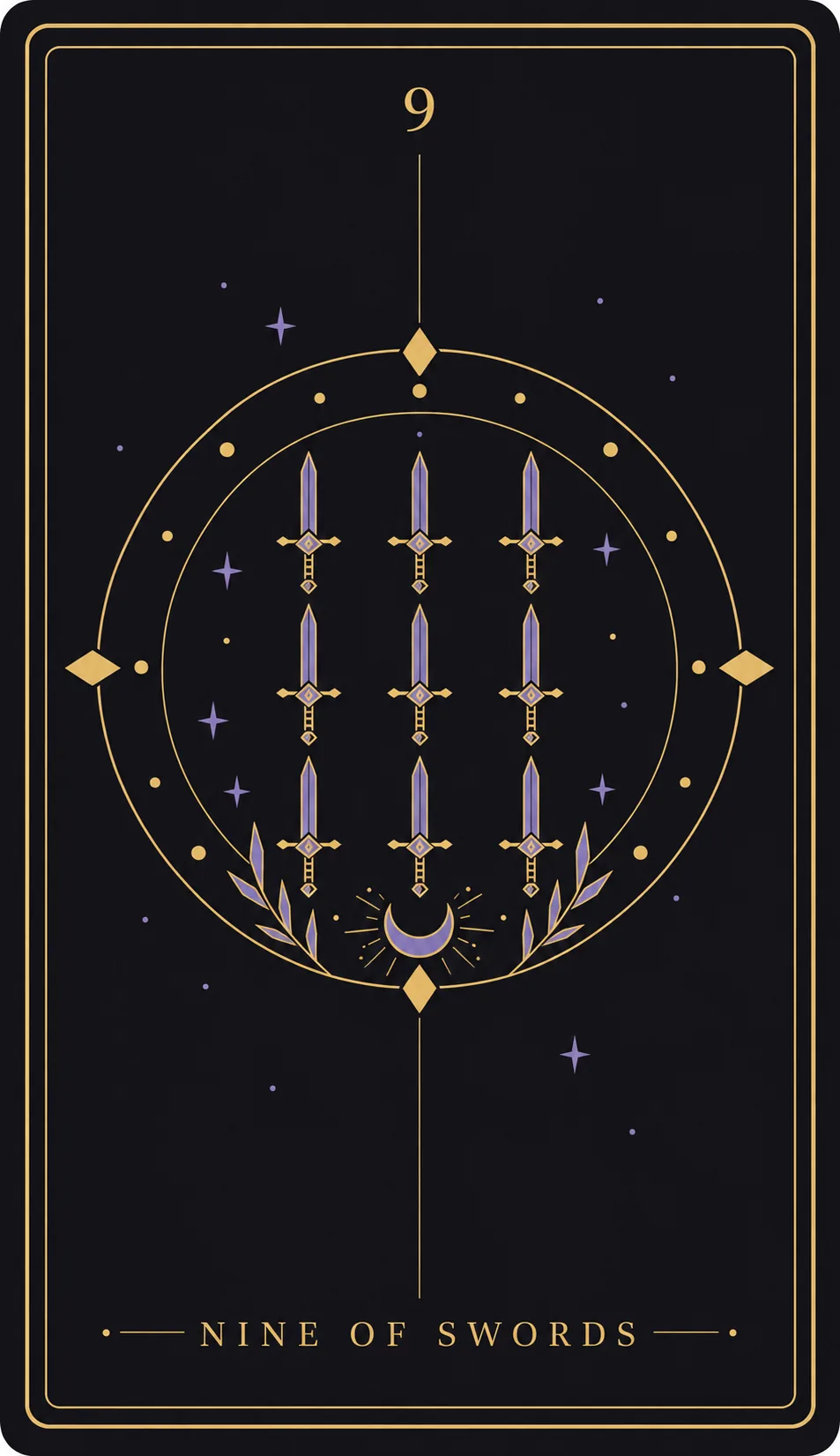
Nine of Swords
- Number
- 9
- Arcana
- Minor Arcana
- Suit
- Swords
- Element
- Air
Upright keywords
- anxiety
- worry
- sleeplessness
- overthinking
Reversed keywords
- hope
- reaching out
- easing worry
Nine of Swords upright
The classic 1909 Pamela Colman Smith image shows someone sitting up in bed, face buried in their hands, while nine swords hang on the dark wall behind them. Notice that the swords aren't touching anyone. This is a card of air, of the mind, and it often points to the 3am hours when a worry grows teeth it doesn't have in daylight. You may recognise the loop: rehearsing a conversation, replaying a mistake, bracing for something that hasn't happened. The quilt is stitched with roses and stars, small comforts the figure can't see because their eyes are covered. It might be worth asking what is actually in the room with you right now, and what you've been carrying in your head alone.
Nine of Swords reversed
Reversed, the swords on the wall can feel like they're sliding loose, and that movement often goes one of two ways. Sometimes it's relief: the figure lifts their head, the night thins out, and you find yourself telling a friend the thing you'd been chewing over for weeks. Saying it aloud can shrink it. Other times the worry turns further inward, becoming a quiet background hum you no longer name as worry at all, just how you are. As an air card, it asks about the stories your mind repeats without checking them. You may notice a pull to reach out and an equal pull to stay silent. Even one honest sentence to one person can change the weather in here.
Nine of Swords in love
This card can show up when fear of a relationship is louder than the relationship itself. You might be reading long silences as verdicts, drafting messages you don't send, or lying awake deciding what someone meant by a short reply. The figure in the classic image is alone in the dark, but the room isn't empty of comfort, only of light. Air asks for words, and words are often the missing piece here. It may be worth naming one specific worry to the person involved rather than the whole cloudy mass of it. With friends, or with yourself, the same applies: the thought you're most embarrassed to admit is usually the one that loses power once spoken.
Nine of Swords at work
Nine of Swords at work often points to the gap between the pressure you feel and the pressure that actually exists. You may be running worst-case scenarios about feedback, a deadline, or how you came across in a meeting, and losing hours of attention to a problem that hasn't arrived. The swords hang overhead, unmoving; air cards show us that thought can menace without touching. It might help to write the fear down in plain language and then write what you'd actually do if it happened. Vague dread tends to be heavier than a concrete plan. If a project genuinely needs a conversation with someone, consider whether delay is protecting you or just extending the night.
Nine of Swords and your inner life
The figure's hands cover their eyes, which is worth sitting with. Grief and anxiety both do this: they narrow the world to the size of the thought. But the carved panel on the bed and the embroidered quilt suggest there's more in the room than the dark. As an air card, this one invites you to treat your thoughts as weather rather than truth, something passing through you that you can observe without obeying.
A gentle practice: when the loop starts, name it out loud as *I'm having the thought that...* rather than stating it as fact. Then ask yourself, what would I say to a friend who told me this at three in the morning?
Nine of Swords as a yes or no
This one leans toward *not yet*. The figure in the classic image is awake in the dark, and decisions made in that state tend to be shaped by fear rather than information. Nothing in the picture says the situation is hopeless; the swords are on the wall, not in anyone's hands. But the answer you'd give right now may be an answer your anxiety is giving for you. If you can, let the question sit until daylight, or until you've talked it through with someone whose view you trust. If the pressure to decide immediately is coming from inside your own head rather than from the circumstances, that's worth noticing before you commit either way.
Tarot is for reflection and entertainment. It isn't medical, legal or financial advice.
Draw a card for your question
Hold your question in mind and draw one card. It's free, truly random and takes a minute.
Draw your card