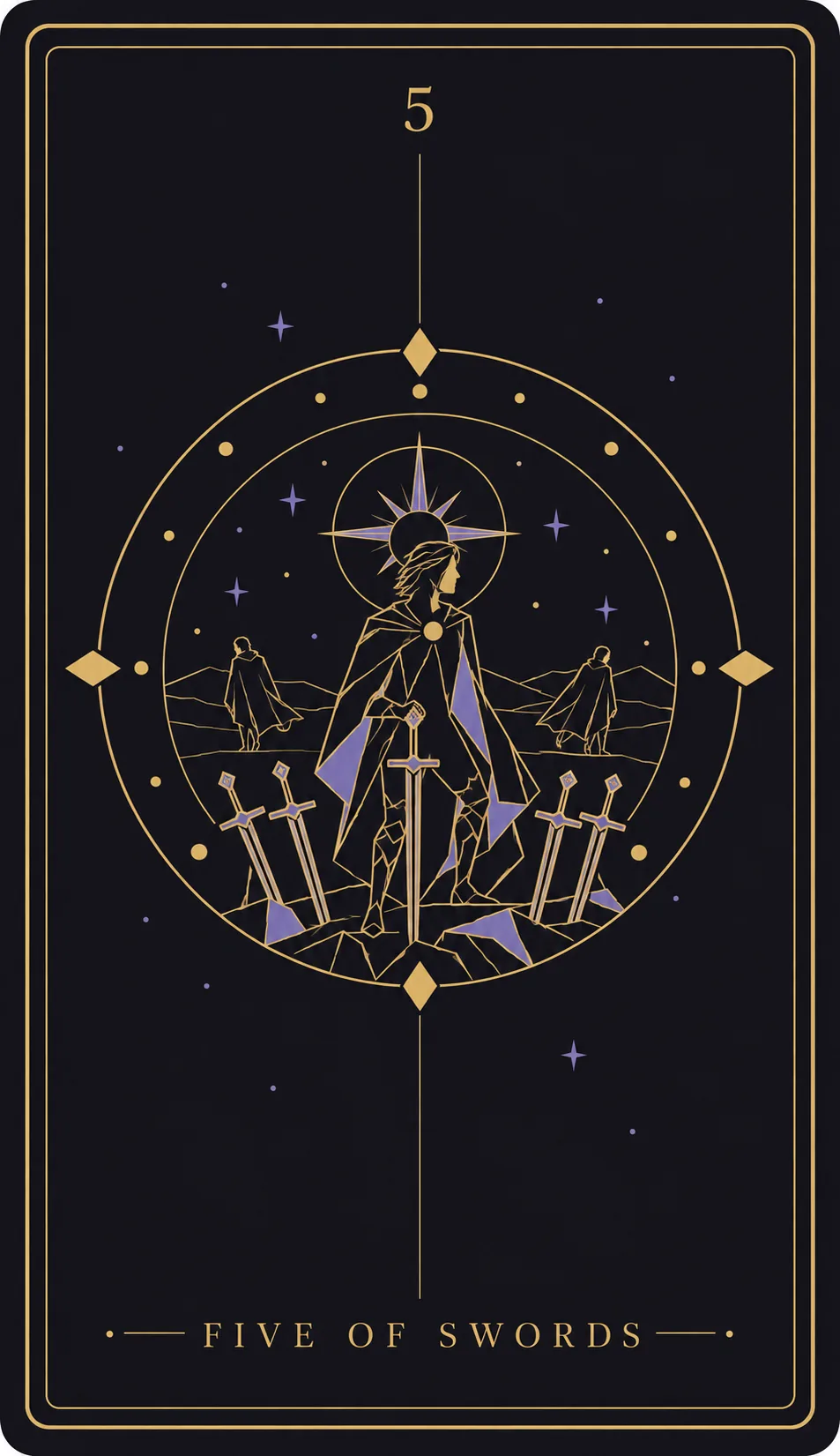
Five of Swords
- Number
- 5
- Arcana
- Minor Arcana
- Suit
- Swords
- Element
- Air
Upright keywords
- conflict
- defeat
- winning at all costs
- tension
Reversed keywords
- reconciliation
- making amends
- moving on
Five of Swords upright
In the classic 1909 Pamela Colman Smith deck, a figure gathers up swords with a smirk while two others walk away with their backs turned, under a sky of torn, ragged clouds. Nobody looks happy. That is the heart of this card: a victory that cost more than it gained. Swords belong to air, the element of thought and speech, and air can cut when it moves too fast.
Drawn upright, this can point to a conflict where being right has started to matter more than being close to someone. You may notice a conversation you keep rehearsing, or a sharpness in how you've been speaking lately. It might be worth asking what you actually want from the argument, and whether winning it would give you that.
Five of Swords reversed
Reversed, the swords on the ground seem harder to pick up. This can suggest the energy of the card turning inward or beginning to loosen. Sometimes it points to the aftermath: the argument is over, and you're left holding the weight of it, replaying lines and wondering who was really hurt. Sometimes it leans towards repair, a message you've been drafting in your head, an apology that no longer feels impossible.
Air clears slowly after a storm. You may find that moving on matters more to you than a verdict on who was right. It might be worth asking whether you're waiting for the other person to speak first, and what it would cost you to go a little before them.
Five of Swords in love
The two figures walking away in this card aren't gone yet, but they are leaving the field. In close relationships, the Five of Swords can point to the kind of disagreement where someone technically wins and both people feel worse. You may recognise the tone: clever, precise, a little cold. Air gives you sharp words, and sharp words land.
This can also show up as replaying old grievances with a friend, or being harsh with yourself in the privacy of your own head. If something here feels familiar, a small step might be naming one thing you want the other person to understand, rather than one thing you want them to admit. It might shift the temperature more than another round of argument would.
Five of Swords at work
Among colleagues or classmates, this card can point to an atmosphere that has gone tense and competitive, where credit is contested and people start keeping score. Air rules ideas and debate, and in a team that has lost its goodwill, even good ideas get used as weapons. You may be the one defending your corner, or the one quietly stepping back from a project that no longer feels worth the friction.
It might be worth asking what you're actually protecting: the work itself, or your standing in someone's eyes. The figure in the picture holds all the swords and stands alone. If a recent win left you isolated, a small repair, acknowledging someone's contribution out loud, could matter more than another point scored.
Five of Swords and your inner life
Those torn clouds overhead suggest a mind that has been agitated for a while. The Five of Swords can invite you to look honestly at how you handle conflict when you feel threatened. Some people go sharp, some go silent, some keep a tally. None of these makes you a bad person; they are old protections doing what they learned to do.
Air responds well to being slowed down. One practice: the next time you catch yourself rehearsing an argument, write out what the other person might say if they were being reasonable, not at their worst. You don't have to believe it. Then sit with this question: *what would I need to feel, rather than to prove, for this to stop mattering so much?*
Five of Swords as a yes or no
This card leans towards no, or at least towards *not like this*. The scene shows a win that empties the field, with two people walking away and one left holding more swords than hands can carry. Whatever is being asked, the imagery suggests that the path forward may involve more friction than the outcome is worth, or that a yes here would come at someone's expense.
Treat that as something to reflect on rather than a verdict. It might be worth asking whether the question itself is framed as a contest, and what would change if it weren't. Sometimes this card's no is really an invitation to find a version of the situation where nobody has to lose.
Tarot is for reflection and entertainment. It isn't medical, legal or financial advice.
Draw a card for your question
Hold your question in mind and draw one card. It's free, truly random and takes a minute.
Draw your card